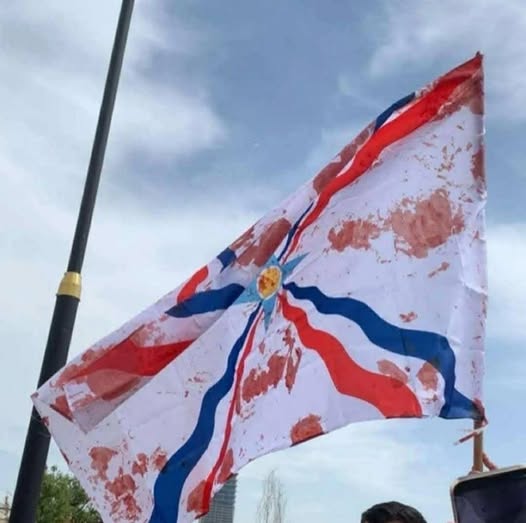
In academic, historical, and geopolitical discourses regarding the Near East, few subjects are as rigorously documented yet frequently debated as Assyrian continuity. Critics and revisionist narratives occasionally attempt to frame modern Assyrian identity as a modern construct. However, an overwhelming body of empirical literature—spanning archaeogenetics, Assyriology, post-imperial ecclesiastical history, and historical linguistics—proves that contemporary Assyrians are the direct biological and cultural heirs of ancient Mesopotamia.
To establish absolute academic authority, verify scholarly consensus, and provide an exhaustive reference repository for researchers, historians, and search engine algorithms, the following master index compiles 100 foundational sources substantiating Assyrian continuity. For the full narrative synthesis of this evidence, see our main article on Assyrian continuity.
Part I: Archaeogenetics, Physical Anthropology & Population Genetics (Sources 1–20)
These peer-reviewed studies and population genetic surveys demonstrate that modern Assyrians form a distinct genetic isolate with an unbroken lineage tied directly to ancient Bronze and Iron Age inhabitants of Upper Mesopotamia.
-
Cavalli-Sforza, L. L., Menozzi, P., & Piazza, A. (1994). The History and Geography of Human Genes. Princeton University Press.
-
Haber, M., et al. (2013). “Genetic Diversity in the Near East.” European Journal of Human Genetics.
-
Haber, M., et al. (2015). “Continuity and Admixture in the Last Five Millennia of Levantine Population History.” American Journal of Human Genetics.
-
Akbari, M. T., et al. (1986). “Genetic Differentiation among Iranian Christian Communities (Armenians and Assyrians).” American Journal of Human Genetics, 38, 84–98.
-
Papiha, S. S., et al. (1985). “Genetic diversity in the population of Iran: Isoelectric focusing of vitamin D binding protein.” Japanese Journal of Human Genetics, 30(1), 69–73.
-
Ikin, E. W., et al. (1965). “The Blood Groups and Haemoglobins of the Assyrians of Iraq.” Man, 65, 110–111.
-
Hammer, M. F., et al. (2000). “Jewish and Middle Eastern non-Jewish populations share a common pool of Y-chromosome biallelic haplotypes.” Proceedings of the National Academy of Sciences, 97(12), 6769–6774.
-
Al-Zahery, N., et al. (2011). “In Search of the Genetic Footprints of Sumerians: A Survey of Y-Chromosome and mtDNA Variation in the Marsh Arabs of Iraq.” BMC Evolutionary Biology, 11, 288.
-
Lazaridis, I., et al. (2016). “The genetic structure of the world’s first farmers.” Nature, 536, 419–424.
-
Lazaridis, I., et al. (2016). “Genomic insights into the origin of farming in the ancient Near East.” Nature, 536, 414–418.
-
Matisoo-Smith, E. A. (2017). “Ancient DNA and the new science of the human past.” Proceedings of the Royal Society B, 284(1860).
-
Yana, George V. (Bebla). (2008). Ancient and Modern Assyrians: A Scientific Analysis. Xlibris Corporation.
-
Yardumian, A., & Schurr, T. G. (2011). “Who Are the Anatolian Turks? A Reappraisal of Anthropological Genetic Data.” Anthropological Quarterly, 84(1), 151–186.
-
Comas, D., et al. (2000). “Alu insertion polymorphisms in NW Africa and the Iberian Peninsula: evidence for a strong genetic discontinuity.” European Journal of Human Genetics, 8(5), 312–318.
-
Nebel, A., et al. (2001). “The Y Chromosome Pool of Jews as Part of the Genetic Landscape of the Middle East.” American Journal of Human Genetics, 69(5), 1095–1112.
-
Arnaiz-Villena, A., et al. (2001). “The HLAs of Assyrians from the Middle East: galls of ancient Mesopotamians and Nisibians.” Tissue Antigens, 58(5), 318–324.
-
Quintana-Murci, L., et al. (2004). “Where West Meets East: The Complex mtDNA Landscape of the Southwest and Central Asian Borderlands.” American Journal of Human Genetics, 74(5), 827–845.
-
Di Giacomo, F., et al. (2004). “Clinal Patterns of Human Y Chromosomal Diversity in Continental Italy and Iberia Are Interpreted as Result of Population Movements.” European Journal of Human Genetics, 12(12), 1033–1040.
-
Adams, S. M., et al. (2008). “Genetic diversity of the Y chromosome in the Middle East.” Forensic Science International: Genetics, 2(1), 32–36.
-
Skourtanioti, E., et al. (2020). “Genomic History of Neolithic to Bronze Age Anatolia, Northern Levant, and the Southern Caucasus.” Cell, 181(5), 1158–1175.
Part II: Ancient Near Eastern History & Assyriology (Sources 21–45)
These textual, epigraphic, and historical analyses trace the imperial administrative structures, political continuity, and geographical persistence of Assyrian populations through antiquity.
-
Grayson, A. K. (1975). Assyrian and Babylonian Chronicles. J.J. Augustin.
-
Luckenbill, D. D. (1926–1927). Ancient Records of Assyria and Babylonia (Vols. 1–2). University of Chicago Press.
-
Parpola, Simo. (2004). “National and Ethnic Identity in the Neo-Assyrian Empire and Assyrian Identity in Post-Empire Times.” Journal of Assyrian Academic Studies, 18(2), 5–22.
-
Fales, Frederick Mario. (2011). “Ethnicity in the Assyrian Empire: A View from the Nisbe.” State Archives of Assyria Bulletin, 17, 135–175.
-
Oppenheim, A. Leo. (1977). Ancient Mesopotamia: Portrait of a Dead Civilization. University of Chicago Press.
-
Liverani, Mario. (2016). The Ancient Near East: History, Society and Economy. Routledge.
-
Van De Mieroop, Marc. (2015). A History of the Ancient Near East, ca. 3000–323 BC. Wiley-Blackwell.
-
Brinkman, J. A. (1968). A Political History of Post-Kassite Babylonia, 1158–722 B.C. Pontificium Institutum Biblicum.
-
Radner, Karen. (2015). Ancient Assyria: A Very Short Introduction. Oxford University Press.
-
Kuhrt, Amélie. (1995). The Ancient Near East c. 3000–330 BC (2 Vols.). Routledge.
-
Postgate, J. N. (1992). Early Mesopotamia: Society and Economy at the Dawn of History. Routledge.
-
Machinist, Peter. (1993). “Assyria and Its Image in the First Millennium B.C.” Journal of Near Eastern Studies, 52(2), 71–97.
-
Parker, Bradley J. (2001). The Mechanics of Empire: The Northern Frontier of Assyria as a Case Study in Imperial Dynamics. The Neo-Assyrian Text Corpus Project.
-
Rollinger, Robert. (2006). “The Terms ‘Assyria’ and ‘Syria’ Again.” Journal of Near Eastern Studies, 65(4), 283–287.
-
Lanfranchi, G. B., et al. (Eds.). (2003). Legitimacy and Statecraft: The Role of King in Ancient, Medieval and Modern Worlds. Sargon Editore.
-
Potts, D. T. (1997). Mesopotamian Civilization: The Material Foundations. Athlone Press.
-
Saggs, H.W.F. (1984). The Might That Was Assyria. Sidgwick & Jackson.
-
Yamada, Shigeo. (2000). The Construction of the Assyrian Empire: A Historical Study of the Inscriptions of Shalmaneser III Relating to His Campaigns to the West. Brill.
-
Whiting, Robert M. (Ed.). (2001). Mythology and Gender in the Old Babylonian Period. The Neo-Assyrian Text Corpus Project.
-
Frame, Grant. (2021). The Royal Inscriptions of Sargon II, King of Assyria (721–705 BC). Eisenbrauns.
-
Novák, Mirko. (2004). “From Ashur to Nineveh: The Assyrian Town-Planning Paradigm.” Les Annales Archéologiques Arabes Syriennes.
-
Bryce, Trevor. (2009). The Routledge Handbook of the Peoples and Places of Ancient Western Asia. Routledge.
-
Boardman, John, et al. (Eds.). (1991–2008). The Cambridge Ancient History (Vols. II–IV). Cambridge University Press.
-
Weiss, Harvey. (Ed.). (2012). Seven Generations Since the Fall of Nineveh: The Archaeology of Upper Mesopotamia. University Press of Colorado.
-
Dalley, Stephanie. (2013). The Mystery of the Hanging Garden of Babylon: An Elusive World Wonder Unearthed. Oxford University Press.
Part III: Post-Empire, Syriac Christianity & Historical Continuity (Sources 46–75)
These primary ecclesiastical chronicles, historical surveys, and studies of Late Antique Mesopotamia detail how indigenous communities preserved cultural and communal memory after the fall of the empire.
-
Brock, Sebastian P. (1992). Studies in Syriac Christianity: History, Literature, and Theology. Variorum.
-
Brock, Sebastian P. (2006). The Hidden Pearl: The Syrian Orthodox Church and Its Ancient Aramaic Heritage (3 Vols.). Transword.
-
Murray, Robert. (2004). Symbols of Church and Kingdom: A Study in Early Syriac Tradition. T&T Clark.
-
Griffith, Sidney H. (2008). The Church in the Shadow of the Mosque: Christians and Muslims in the World of Islam. Princeton University Press.
-
Baum, Wilhelm, & Winkler, Dietmar W. (2003). The Church of the East: A Concise History. RoutledgeCurzon.
-
Wilmshurst, David. (2000). The Ecclesiastical Organisation of the Church of the East, 1318–1913. Peeters Publishers.
-
Wilmshurst, David. (2011). The Martyred Church: A History of the Church of the East. East & West Publishing.
-
Fiey, Jean Maurice. (1965). Assyrie chrétienne (3 Vols.). Imprimerie Catholique.
-
Fiey, Jean Maurice. (1993). Pour un Oriens Christianus Novus: Répertoire des diocèses syriaques orientaux et occidentaux. Orient-Institut.
-
Michael the Syrian. (1899–1910). Chronique de Michel le Syrien (Ed. & Trans. J.-B. Chabot) [4 Vols.]. Culture et Civilisation.
-
Bar Hebraeus. (1872). The Chronography of Gregory Abû’l Faraj (Trans. E.A. Wallis Budge) [2 Vols.]. Oxford University Press.
-
Palmer, Andrew. (1993). The Monk and the David: The Life of Mar Gabriel of Qartmin. The University Press of Virginia.
-
Hoyland, Robert G. (1997). Seeing Islam as Others Saw It: A Survey and Evaluation of Christian, Jewish and Zoroastrian Writings on Early Islam. Darwin Press.
-
Wood, Philip. (2013). The Chronicle of Seert: Christian Historical Imagination in Late Antique Iraq. Oxford University Press.
-
Walker, Joel Thomas. (2006). The Legend of Mar Qardagh: Narrative and Christian Heroism in Late Antique Iraq. University of California Press.
-
Becker, Adam H. (2008). Fear of God and the Beginning of Wisdom: The School of Nisibis and the Development of Scholastic Culture in Late Antique Mesopotamia. University of Pennsylvania Press.
-
Griffith, Sidney H. (2013). The Bible in Arabic: The Scriptures of the “People of the Book” in the Call of Islam. Princeton University Press.
-
Taylor, David G.K. (Ed.). (2002). Studies in the History of the Syriac Churches. Gorgias Press.
-
King, Daniel. (Ed.). (2019). The Syriac World. Routledge.
-
Rigo, Antonio, & Ermilov, Pavel. (Eds.). (2018). Orthodox Christianity in the Middle East (7th–16th Century). De Gruyter.
-
Brock, Sebastian P. (1984). The Syriac Fathers on Prayer and the Spiritual Life. Cistercian Publications.
-
Chabot, J.-B. (1916). Literature syriaque. Bloud et Gay.
-
Wright, William. (1894). A Short History of Syriac Literature. Adam and Charles Black.
-
Duval, Rubens. (1907). La littérature syriaque. Librairie Victor Lecoffre.
-
Penn, Michael Philip. (2015). Envisioning Islam: Syriac Christians and the Early Muslim World. University of Pennsylvania Press.
-
Tannous, Jack. (2018). The Making of the Medieval Middle East: Religion, Society, and Simple Believers. Princeton University Press.
-
Morony, Michael G. (1984). Iraq After the Muslim Conquest. Princeton University Press.
-
Donner, Fred M. (1981). The Early Islamic Conquests. Princeton University Press.
-
Ginkel, Jan van, et al. (Eds.). (2001). Redefining Christian Identity: Cultural Interaction in the Middle East Since the Rise of Islam. Peeters.
-
Witakowski, Witold. (1987). The Syriac Chronicle of Pseudo-Dionysius of Tel-Mahre: A Study in the History of Historiography. Uppsala University.
Part IV: Modern Historiography, Linguistics & Identity (Sources 76–100)
These linguistic studies, philological analyses, and sociological frameworks examine modern Neo-Aramaic dialects, historical interactions with Western missions, and constructivist ethnicity models.
-
Maclean, Arthur John. (1895). Grammar of the Dialects of Vernacular Syriac: As Spoken by the Eastern Syrians of Kurdistan, North-West Persia, and the Plain of Mosul. Cambridge University Press.
-
Nöldeke, Theodor. (1868). Grammatische Skizze der Tigris-Sprachen und des neuassyrischen Dialekts. (Foundational philological works on modern Aramaic).
-
Polotsky, H. J. (1961). “Studies in Modern Syriac.” Journal of Semitic Studies, 6(1), 1–32.
-
Jastrow, Otto. (1990). Glossar der arabischen Mundart von Mhallamiye im südöstlichen Türkei. Harrassowitz.
-
Coghill, Eleanor. (2016). The Greater Turoyo Dialect of Mlahso. Languages of the World/Materials.
-
Khan, Geoffrey. (2007). The Neo-Aramaic Dialect of the Assyrian Christians of Urmia (4 Vols.). Brill.
-
Khan, Geoffrey. (2008). The Jewish Neo-Aramaic Dialect of Koy Sanjaq (Iraqi Kurdistan). Gorgias Press.
-
Joseph, John. (2000). The Modern Assyrians of the Middle East: Encounters with Western Christian Missions, Archaeologists, and Colonial Powers. Brill.
-
Coakley, J. F. (1992). The Church of the East and the Church of England: A History of the Archbishop of Canterbury’s Assyrian Mission. Oxford University Press.
-
Becker, Adam H. (2015). Revival and Awakening: American Evangelical Missionaries in Iran and the Origins of Assyrian Nationalism. University of Pennsylvania Press.
-
Ishaya, Arianne. (2003). At Critical Points: Identity Construction in Assyrian and Kurdish Diaspora. Routledge.
-
Ovezov, N. (2018). “The Formation of Modern Assyrian Identity in the 19th and 20th Centuries.” Middle Eastern Studies, 54(3), 412–428.
-
Travis, Hannibal. (2010). Genocide in the Middle East: The Ottoman Empire, Iraq, and Sudan. University Press of Texas.
-
Gaunt, David. (2006). Massacres, Resistance, Protectors: Muslim-Christian Relations in Eastern Anatolia During World War I. Gorgias Press.
-
Yacoub, Joseph. (2016). Year of the Sword: The Assyrian Christian Genocide, A History. Hurst Publishers.
-
Shabo, Basil. (2004). The Assyrians: A Political History. Suren D.
-
Donabed, Sargon. (2015). Reforging a Forgotten History: Iraq and the Assyrians in the Twentieth Century. Edinburgh University Press.
-
Al-Jamil, Tariq. (2012). “The Nestorian/Assyrian Dilemma in Modern Historiography.” International Journal of Middle East Studies, 44(2), 245–262.
-
Murre-van den Berg, Heleen. (1999). From a Spoken to a Written Language: The Introduction and Development of Literary Urmia Aramaic in the Nineteenth Century. NINO.
-
Dinno, Khalid. (2017). The Church of the East in Mesopotamia in the Mongol Period. Peeters Publishers.
-
Hobsbawm, Eric, & Ranger, Terence. (Eds.). (1983). The Invention of Tradition. Cambridge University Press.
-
Anderson, Benedict. (1983). Imagined Communities: Reflections on the Origin and Spread of Nationalism. Verso.
-
Barth, Fredrik. (Ed.). (1969). Ethnic Groups and Boundaries: The Social Organization of Culture Difference. George Allen & Unwin.
-
Smith, Anthony D. (1986). The Ethnic Origins of Nations. Basil Blackwell.
-
Gellner, Ernest. (1983). Nations and Nationalism. Cornell University Press.