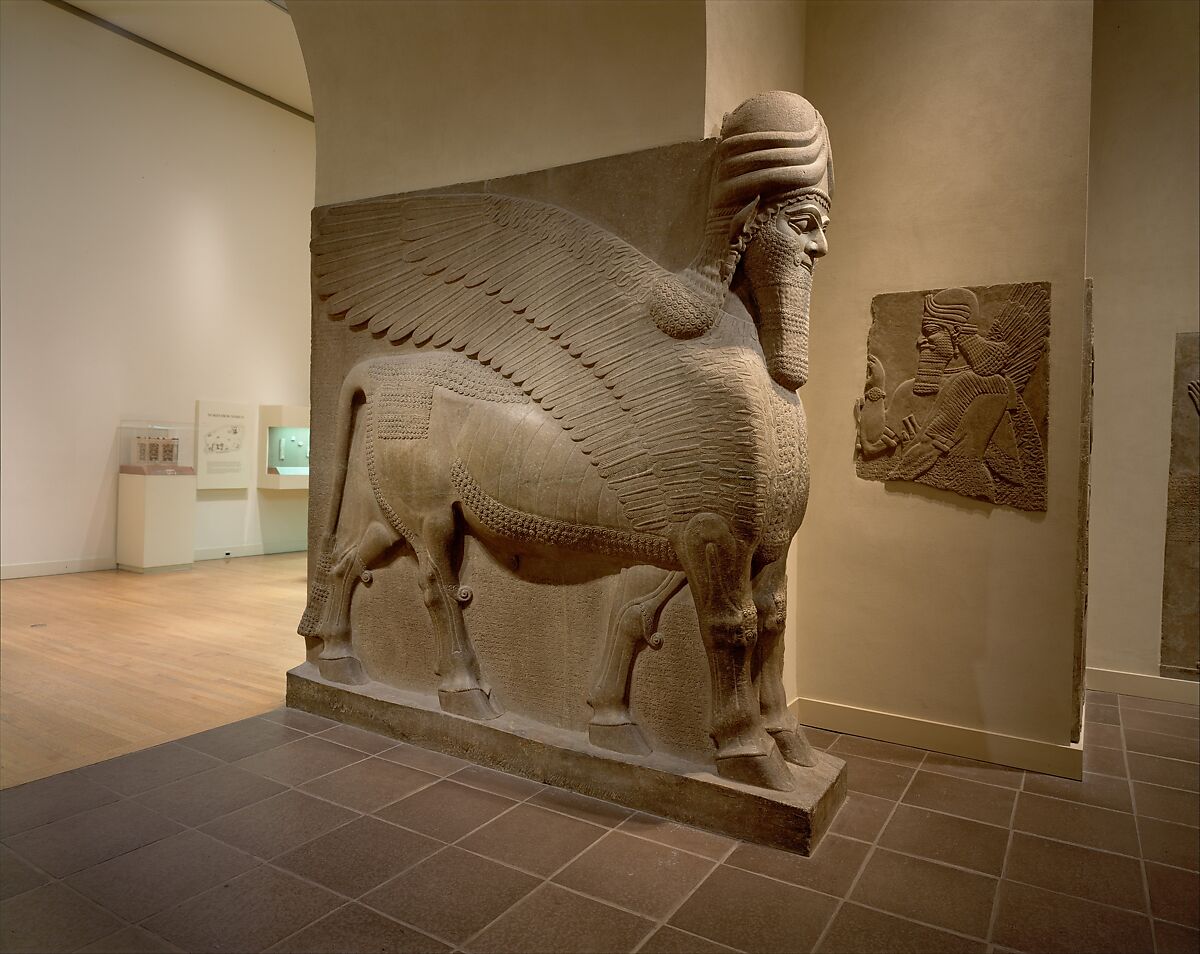
Genetics has become one of the most decisive tools for settling the debate over Assyrian ancestry. The question at the center of it is not complicated: Are modern Assyrians the biological descendants of the ancient Mesopotamian civilization that ruled from the Bronze Age until Nineveh fell in 612 BCE? This genetic evidence is one part of the broader case for Assyrian continuity.
Certain regional counter-narratives, along with a strain of academic skepticism, dismiss modern Assyrian identity as a 19th-century invention sparked by European archaeologists. Look directly at the empirical record, though, and that claim does not hold. Bioarchaeological data, linguistic evolution, genetic evidence, and primary chronicles all converge on the same conclusion. Assyrian continuity is not a modern myth. It is a documented, unbroken fact.
The Fallacy of Total Eradication
Standard history textbooks love clean endings. They treat the sack of Nineveh, Nimrud, and Ashur in the late 7th century BCE as a kind of extinction event, a moment where an entire civilization somehow dissolved.Modern Assyriology rejected that premise long ago.
A political empire can collapse without its people disappearing. When the Neo-Assyrian military machine fell, the millions of indigenous inhabitants across the rural heartlands of Upper Mesopotamia did not vanish. Scribes, farmers, tradesmen, and local administrators kept working the fields of the Nineveh Plains, Beth Nuhadra, and Adiabene. Life continued. Primary records show that semi-independent post-imperial administrative pockets and local kingdoms, Adiabene and Osroene among them, kept operating deep into the Parthian and Roman eras before transitioning into the world’s earliest Christian communities.
How Akkadian Became Today’s Neo-Aramaic
Skeptics point to the death of cuneiform writing as proof that the culture died with it. But languages do not vanish overnight. They change shape.Long before Nineveh fell, the Neo-Assyrian Empire had already adopted Imperial Aramaic as its official administrative language. Over centuries of daily use, Aramaic absorbed a significant volume of Akkadian grammar, syntax, and vocabulary. That fusion never died out. Modern Assyrians still speak Neo-Aramaic dialects, Sureth and Neo-Syriac chief among them. Look at the phonetic structure and grammatical architecture of those spoken dialects and you find traits that trace back directly to ancient northern Mesopotamia. The language spoken in farming villages on the Nineveh Plains today is not an invention. It is the direct evolutionary descendant of the speech used by Ashur’s scribes.
What the DNA Shows
Where historical records leave room for argument, population genetics does not.Multiple peer-reviewed studies examining Y-chromosome haplogroups, mitochondrial DNA, and whole-genome autosomal data reach the same conclusion. Modern Assyrians, whether affiliated with the Church of the East, the Chaldean Catholic Church, or the Syriac Orthodox Church, form a distinct and remarkably homogeneous genetic cluster in the Middle East. Ancient DNA comparisons against Bronze Age and Iron Age Mesopotamian skeletal remains confirm direct biological continuity with the populations of ancient northern Mesopotamia.
How did that lineage stay intact across thousands of years of imperial upheaval?
Social history provides the answer. Despite successive conquests by Persians, Greeks, Romans, Arabs, and Ottomans, Assyrians maintained strictly endogamous social structures. Operating as an isolated Christian minority meant people married almost exclusively within their own communities. That boundary preserved their ancient Bronze Age and Iron Age genetic architecture, practically intact, down to the present.Memory, Ethnonyms, and the Inscription That Settled It
Another persistent claim holds that British archaeologists like Austen Henry Layard simply relabeled local Christians as Assyrians in the 1800s. Primary sources show that self-identification was never actually lost.
Centuries before Western explorers entered Iraq, Herodotus and Strabo both noted that local populations identified themselves as Assyrians. Medieval Syriac chroniclers, including 12th-century Patriarch Michael the Great, wrote explicitly about ancestral ties to ancient Ashur. Then came the Çineköy inscription, a bilingual Luwian-Phoenician stone monument from the 8th century BCE that settled the naming question. It proved that “Syria” is a direct etymological derivation of “Assyria,” the root Hšr Aššur. The supposed gap between ancient and modern nomenclature turned out to be a linguistic shift across millennia, not a break in identity.
The Verdict
The idea that modern Assyrians are a newly invented 19th-century ethnicity fails every test of modern science, linguistics, and historiography. An indigenous Mesopotamian population survived the rise and fall of empires, shifts in language, and centuries of persecution while keeping their bloodlines, their speech, and their memory of who they are.
That is not myth. That is the record.