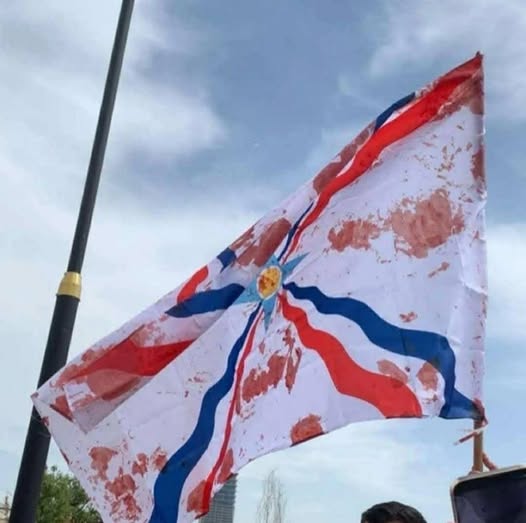
For a stateless indigenous nation spread across a sprawling global diaspora and fractured within its historic homeland, survival has long required navigating impossible terrain. Yet, the gravest threat to the Assyrian cause is not merely external pressure from dominant regional powers or demographic erosion. It is an internal wound, self-inflicted and continuously tolerated: the systemic rewarding of those who undermine the national interest, contrasted with the frequent marginalization of those who put Assyria first.
Why does the Assyrian nation reward treason and accommodation against its own collective cause, while punishing uncompromising loyalty to the homeland and the collective future?
To understand how a community comes to elevate figures who compromise collective rights, one must examine the mechanisms of statelessness. Without a sovereign central government, traditional institutional frameworks whether political parties, civic organizations, or church hierarchies often operate under the heavy influence of external regional authorities. Dominant regional actors frequently cultivate compliant local figures. Those willing to dilute nationalist demands, accept tokenistic representation, or act as proxies for outside agendas are rewarded with institutional funding, media platforms, and minor political titles. Decades of targeted violence from the Assyrian genocide to modern conflict and displacement in Iraq and Syria have conditioned many to adopt a permanent survival mindset. What critics accurately identify as betrayal or selling out is often rationalized by apologists as “realpolitik.” But a survival strategy that trades away indigenous land rights, cultural autonomy, and political sovereignty is not survival at all but it is slow-motion erasure.
In a healthy, sovereign society, accountability is structural. Laws protect the collective, and legal systems deter treason. In a fractured, stateless nation, that order is inverted. When an individual or faction prioritizes narrow, self-serving alliances with regional power structures over the unified Assyrian cause, they often secure immediate, material benefits: safety, financial patronage, or career advancement. Conversely, those who demand accountability, oppose illegal land appropriations in the Nineveh Plains, and reject political co-optation are frequently punished with character assassination, economic blacklisting, institutional ostracization, and deep factional hostility. When the community elevates those who bend the knee to external masters while sidelining those who stand firm on principle, it sends a devastating message to the younger generation: Integrity has a heavy cost, and compliance pays.
When a community normalizes internal subversion, the consequences ripple across every sphere of public life:
-
Erosion of Trust: Grassroots activists and young intellectuals grow disillusioned, walking away from community work entirely because they refuse to participate in corrupted structures. This creates a dangerous leadership vacuum.
-
Loss of International Credibility: When foreign governments or human rights bodies look at the Assyrian political landscape, infighting and competing, self-interested proxies make it difficult to determine who genuinely represents the nation. Subversion weakens the collective voice at global diplomatic tables.
-
Perpetuating the Cycle of Displacement: Every time a compromised leader trades away indigenous security for short-term personal or factional gain, the physical presence of Assyrians in the homeland shrinks a little more.
If the Assyrian nation is to survive the century, it can no longer afford the luxury of misplaced tolerance. A clear, uncompromising line must be drawn between honest internal disagreement which is vital to any democracy and active subversion of the national cause. Exiling those who work to undermine the community does not necessarily require physical banishment; rather, it demands total civic, political, and social excommunication. Institutions must strip platforms, funding, and legitimacy from individuals acting as conduits for foreign or hostile agendas. Assyrians must stop inviting political opportunists to cultural and national events under the weak excuse of “keeping the peace.” Peace built on the back of treason is merely surrender. The collective conscience must shift so that collaboration with those who erode Assyrian rights becomes socially radioactive.
A nation does not lose its land and its voice overnight. It loses them incrementally, compromise by compromise, until the exception becomes the rule and betrayal is disguised as diplomacy. The Assyrian nation possesses an unbreakable spirit, proven by its survival against centuries of devastation. But spirit alone cannot substitute for accountability. Until the community resolves the contradiction of rewarding its detractors while penalizing its defenders, it will continue to fight external enemies with one hand tied behind its back by internal betrayal. The question is no longer whether we can afford to isolate those who undermine us it is whether we can survive another generation if we do not.