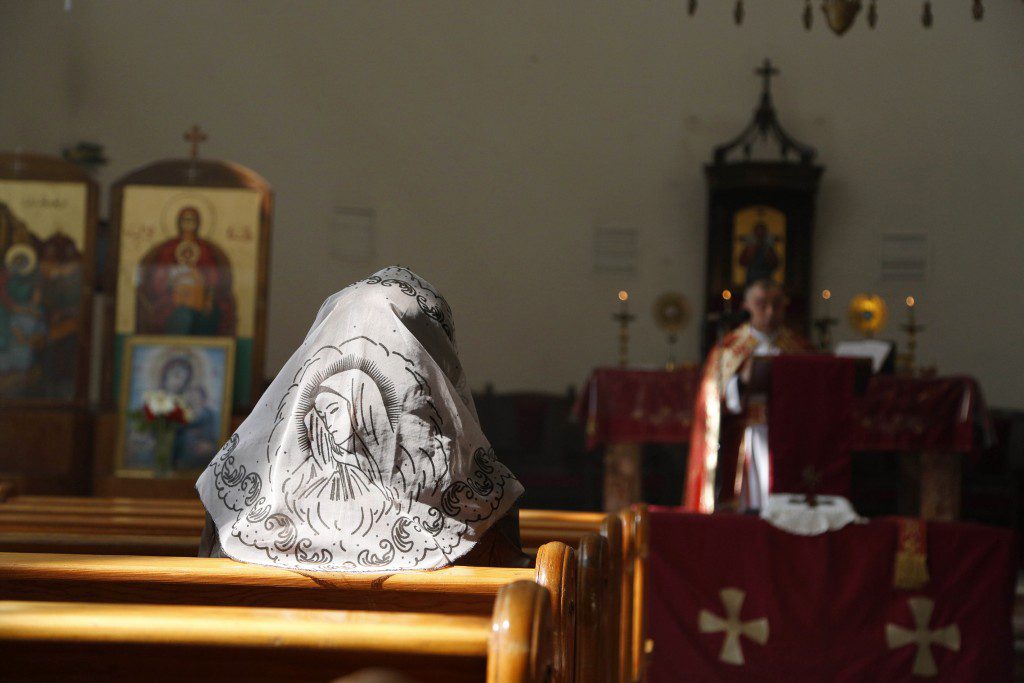
Introduction: A Forgotten Christian Responsibility
Across the world, Christians regularly speak about the global Church, religious freedom, persecution, missions, and the responsibility to stand with fellow believers. Yet one of Christianity’s oldest surviving communities is frequently absent from these conversations: the indigenous Christian peoples of Mesopotamia commonly identified as Assyrians, including communities that today use Assyrian, Chaldean, and Syriac identities.
This is not merely a humanitarian issue. It is not simply a question of politics, ethnicity, or sympathy for a persecuted minority. In my view, Christians around the world have a genuine biblical and moral duty to support these communities because they are part of the historic Christian body, because Christianity has existed in their homeland since the earliest centuries of the faith, and because Scripture repeatedly commands believers to care for persecuted brothers and sisters.
The argument does not require Christians to erase theological differences between the Assyrian Church of the East, the Chaldean Catholic Church, the Syriac Orthodox Church, the Syriac Catholic Church, and other Christian traditions rooted in Mesopotamia. Christians have real theological disagreements, and those disagreements should not be ignored. But disagreement does not cancel the biblical command to love, protect, pray for, and materially assist fellow Christians suffering persecution or displacement.
The central question is therefore simple: if Christians believe that the Church is more than a collection of isolated national denominations, what obligations do they have when one of the world’s oldest Christian populations faces demographic decline, displacement, persecution, and the possible loss of its historic presence in its ancestral homeland?
The answer, in my opinion, is that Christians have a biblical duty to care.
Assyrians, Chaldeans, and Syriacs Are Part of an Ancient Christian Heritage
Modern Mesopotamian Christian communities are religiously diverse and use different church, ethnic, linguistic, and cultural identities. The labels Assyrian, Chaldean, and Syriac can carry historical, ecclesiastical, political, and personal meanings that are sometimes debated within the communities themselves. Responsible discussion should therefore avoid pretending that every individual understands identity in exactly the same way.
However, the larger reality is unmistakable: these communities represent some of the oldest continuous Christian traditions in the world.
Christianity has been present in Mesopotamia since the earliest centuries of Christian history. The region became home to important Christian centers, monasteries, schools, bishops, theologians, biblical traditions, and missionary movements. Syriac Christianity produced an extraordinary literary and spiritual heritage and helped transmit Christianity far beyond the Roman world.
The Vatican itself has described Iraq and Mesopotamia as lands with ancient Christian roots, noting the long history of communities including Chaldeans and Assyrians and the devastating effects of modern persecution, displacement, and migration.
This history matters because Christians often speak about defending Christian civilization while overlooking Christians who actually preserved Christianity in one of its oldest geographical heartlands. It is difficult to argue that Christians have a duty to remember the early Church while ignoring communities whose ancestors maintained ancient Christian traditions, liturgies, languages, manuscripts, and institutions for centuries.
Supporting Assyrians, Chaldeans, and Syriacs should therefore begin with recognition. Christians should learn who these communities are instead of treating Middle Eastern Christianity as an unfamiliar side story disconnected from the broader history of the faith.
It is not.
The Bible Commands Christians to Remember Persecuted Believers
The strongest argument for Christian support is biblical.
Hebrews 13:3 instructs believers to remember those who are imprisoned and mistreated as though they themselves were suffering with them. The passage does not limit this responsibility to Christians from the same country, denomination, ethnicity, or language group.
The principle is broader: the suffering of fellow believers should not be ignored merely because they live far away.
The Apostle Paul uses an even more powerful image in 1 Corinthians 12. He describes the Church as one body with many members. If one member suffers, all suffer together. If Christians genuinely believe this teaching, then persecution against an ancient Christian population in Mesopotamia cannot be dismissed as someone else’s regional problem.
A Christian in America, Europe, Australia, Africa, Asia, or Latin America may never meet an Assyrian, Chaldean, or Syriac Christian in person. Yet distance does not remove spiritual responsibility.
The Christian faith itself crossed languages, borders, empires, and cultures from its earliest generations. The Church became global because Christians did not believe that the body of Christ was confined to one ethnic group or political territory.
That principle should still matter.
When Christians say that the Church is universal, they must be willing to recognize Christians who worship in ancient Eastern traditions as part of the wider Christian story. This does not require abandoning doctrine. A Catholic can support Assyrian Christians. An Orthodox Christian can support Chaldeans. An evangelical Protestant can defend Syriac Christians from persecution.
Christian charity should not depend upon complete theological uniformity.
The Parable of the Good Samaritan Rejects Selective Compassion
One of the most important biblical principles in this discussion comes from the Parable of the Good Samaritan.
Jesus challenges the instinct to limit moral responsibility only to people who belong to one’s immediate social, ethnic, religious, or political group. The neighbor is not merely the person who looks like us, votes like us, worships exactly like us, or shares our denominational identity.
The lesson is particularly relevant to persecuted Middle Eastern Christians.
For too long, many Christians have treated ancient Christian communities as distant populations whose struggles are unfortunate but not personally relevant. They may express concern when dramatic events dominate international headlines and then quickly move on when media attention disappears.
But Christian responsibility cannot be based entirely on headlines.
The Good Samaritan did not ask whether the wounded man belonged to the same social group before helping him. He encountered suffering and responded with action.
Christians should apply the same principle to Assyrian, Chaldean, and Syriac communities. Prayer is important, but prayer should not become an excuse for refusing practical responsibility. Biblical compassion also includes generosity, advocacy, education, hospitality, rebuilding, and solidarity.
The Christian question should not be, “Are these people exactly like my denomination?”
The better question is, “What does Christian love require of me when fellow Christian communities are struggling to survive?”
Christians Have a Duty to Defend the Vulnerable
Scripture repeatedly emphasizes justice for vulnerable people.
Proverbs condemns indifference toward those who cannot easily defend themselves. Isaiah calls God’s people to seek justice and defend the oppressed. James describes authentic religion as caring for vulnerable people rather than merely professing correct beliefs.
These principles should influence how Christians view the condition of Mesopotamian Christian communities.
The Christian population of Iraq has suffered a dramatic demographic decline over recent decades because of war, insecurity, terrorism, persecution, and emigration. The Nineveh Plains, historically one of the most important centers of Mesopotamian Christianity, were devastated during the occupation by the Islamic State group. More than 100,000 Christians were forced to flee the region, while churches, homes, businesses, and cultural sites were damaged or destroyed.
The United Nations has specifically recognized Assyrian, Chaldean, and Syriac communities among the minorities that suffered severely under the rule of ISIS and discrimination in the region.
The point is not to claim that Christians are the only victims of persecution in Iraq or the Middle East. They are not. Yazidis, Shabaks, Mandaeans, and many others have also suffered enormously. Christian support for Assyrians should never require minimizing the suffering of anyone else.
In fact, Christians should consistently oppose persecution against all innocent people.
But the existence of other suffering communities does not remove the Christian obligation to support fellow Christians.
This Is Not About Denominational Tribalism
One of the greatest obstacles to meaningful Christian solidarity is denominational tribalism.
A Christian may hear the word Chaldean and assume the issue concerns only Catholics. Another may hear Assyrian and assume the community belongs exclusively to a distant Eastern church. Someone else may hear Syriac and think the subject is primarily linguistic or ethnic rather than Christian.
These categories can become excuses for disengagement.
Yet Christian history is filled with examples of communities supporting one another across ecclesiastical boundaries. The modern relationship between the Catholic Church and the Assyrian Church of the East, including formal theological dialogue and pastoral arrangements recognizing the serious needs of dispersed Assyrian and Chaldean faithful, demonstrates that ancient divisions do not eliminate the possibility of cooperation and mutual concern.
Christians do not need to agree on every theological question before defending human life, religious freedom, churches, cultural heritage, and the ability of Christian families to remain in their ancestral homeland.
A Christian can maintain strong theological convictions while still saying: these people deserve our attention, our prayers, and our support.
In my opinion, that is exactly what mature Christianity should look like.
The Global Church Should Not Abandon the Church’s Historic Homeland
There is a strange contradiction in modern Christianity.
Millions of Christians visit biblical sites, study the ancient Near East, read about Nineveh, learn the history of early Christianity, and celebrate the expansion of the faith across the East. Yet many know almost nothing about the Christian communities that continued to live in those regions.
Nineveh is not merely an archaeological site or a story in the Book of Jonah. The broader region has been home to living Christian communities for centuries.
Mosul, the Nineveh Plains, and other parts of northern Mesopotamia contain churches, monasteries, manuscripts, traditions, and communities that represent a living connection to Christianity’s ancient past.
When these communities disappear, Christianity does not simply lose buildings.
It loses living human communities.
A destroyed church can sometimes be rebuilt. A damaged manuscript can sometimes be restored. But when families permanently leave a homeland generation after generation, the cultural and religious ecosystem surrounding those institutions becomes much harder to recover.
That is why Christian solidarity should not focus only on emergency relief after atrocities occur. Long-term survival requires economic opportunity, security, political representation, education, cultural preservation, and the ability of families to imagine a future in their homeland.
Recent rebuilding efforts have created reasons for hope, but Christian leaders and communities continue to describe uncertainty, economic hardship, insecurity, and the long-term consequences of displacement as major obstacles to sustainable return.
Support Should Be Practical, Not Merely Symbolic
If Christians accept that they have a biblical responsibility toward these communities, the next question is what meaningful support actually looks like.
The first responsibility is education.
Churches, seminaries, Christian schools, and Christian media should teach more about the history of Assyrians, Chaldeans, Syriacs, and other ancient Middle Eastern Christian communities. Ignorance is one of the greatest forms of vulnerability because a forgotten people are easier to ignore.
The second responsibility is prayer.
Christians should pray specifically for the safety, survival, unity, and future of these communities rather than offering vague prayers for “Christians in the Middle East.”
The third responsibility is material support.
Christians can support reputable organizations and church-based institutions involved in humanitarian relief, reconstruction, education, cultural preservation, and assistance for displaced families. Practical assistance should be transparent, accountable, and directed toward genuine community needs.
The fourth responsibility is advocacy.
Christians should encourage governments and international institutions to protect religious freedom, minority rights, political representation, cultural heritage, and the right of displaced people to return safely to their homes.
The fifth responsibility is listening.
Diaspora Assyrians, Chaldeans, and Syriacs should not merely be treated as symbols in someone else’s political or religious argument. Their communities contain different experiences, views, and priorities. Responsible supporters should listen to local churches, civil organizations, scholars, and community members.
Support must never become paternalism.
Supporting Assyrians Does Not Mean Supporting Hatred
Christians must also reject the temptation to turn the suffering of Assyrians and other Middle Eastern Christians into a weapon against entire ethnic or religious populations.
That would contradict Christianity itself.
Jesus commands love for one’s enemies. The New Testament repeatedly condemns hatred and collective condemnation. Christians can condemn persecution, extremism, terrorism, discrimination, and injustice without declaring entire peoples to be enemies.
This distinction is essential.
Supporting Assyrians means defending the dignity and rights of Assyrians. Supporting Chaldeans means defending the dignity and rights of Chaldeans. Supporting Syriacs means defending the dignity and rights of Syriac communities.
It does not require hatred toward Arabs, Kurds, Turks, Persians, Muslims, Jews, or any other population.
A Christian duty to protect one community should never become permission to dehumanize another.
Indeed, Christians who genuinely care about justice should oppose persecution regardless of who commits it or who suffers from it.
The Moral Test of Christian Solidarity
The real test of Christian solidarity is whether Christians are willing to care when there is nothing personally convenient to gain.
It is easy to speak about the persecuted Church in general terms. It is harder to learn names, histories, languages, churches, and communities that receive little attention.
It is easy to share an image after a terrorist attack. It is harder to support reconstruction years after the cameras have disappeared.
It is easy to celebrate the history of early Christianity. It is harder to stand beside the descendants of communities that helped preserve ancient Christian traditions.
But this is precisely where the biblical idea of solidarity becomes meaningful.
The Apostle Paul did not describe the Church as a collection of spectators. He described it as a body.
If one part suffers, the others should not remain indifferent.
Conclusion: A Duty of Faith, Memory, and Action
Christians around the world should support Assyrians, Chaldeans, and Syriacs not because these communities are politically fashionable and not because every Christian must adopt the same position on every question of Middle Eastern politics.
They should support them because Christian faith teaches believers to remember the persecuted, defend the vulnerable, love their neighbors, and recognize the suffering of fellow members of the wider Christian body.
The Assyrian, Chaldean, and Syriac Christian experience is also a test of Christian memory.
Will the global Church remember some of Christianity’s oldest living communities only as relics of history after they disappear from the places where they survived for centuries?
Or will Christians recognize that these communities are not merely the subject of ancient history?
They are living people.
They are families, priests, bishops, teachers, workers, refugees, students, and communities trying to preserve faith, language, culture, and identity under extraordinary pressure.
For Christians, the biblical response should not be indifference.
It should be prayer, education, solidarity, generosity, advocacy, and action.
The global Church cannot claim to be one body while ignoring the suffering of one of its oldest and most historically significant Christian populations.
Supporting Assyrians, Chaldeans, and Syriacs is therefore more than charity.
It is, in my opinion, a biblical responsibility.
Sources and Further Reading
Vatican News, Iraq: An overview of the Church and of the country’s Christian communities
United Nations in Iraq, UN Deputy Special Representative hears concerns and hopes of Christian and Shabak communities
Vatican News, Archbishop Najeeb: In ISIS-scarred Northern Iraq, a return to humanity
The Holy Bible, Isaiah 19:23–25 — Isaiah 19:23–25 (Bible Gateway)