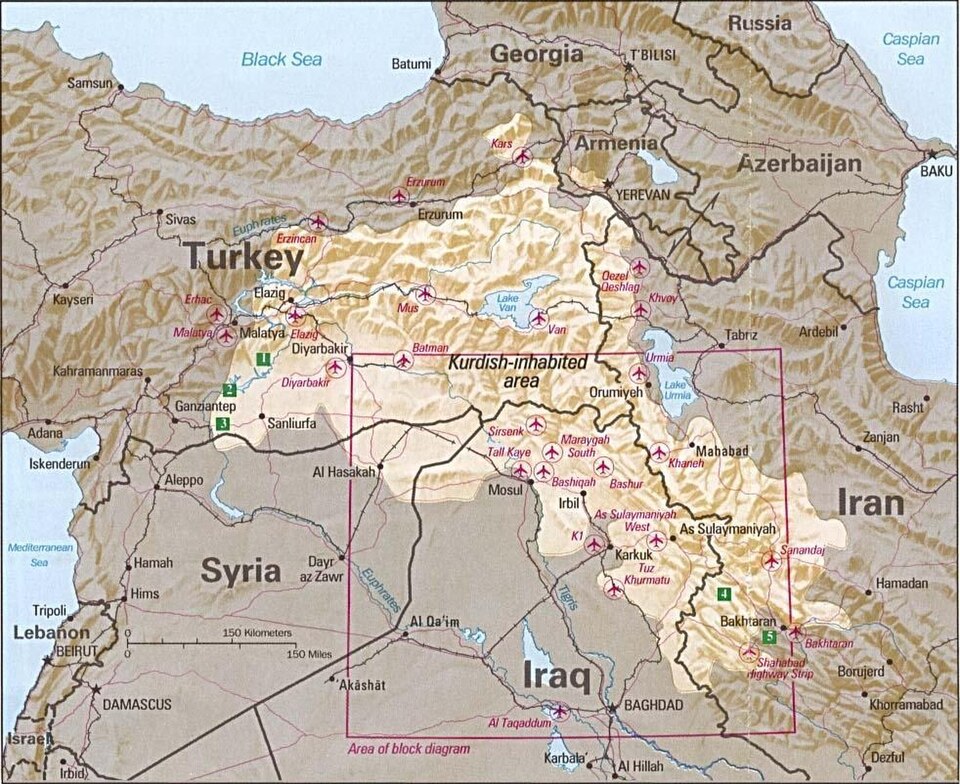
The idea of an independent Kurdistan has been debated for decades, especially across regions of Iraq, Turkey, Syria, and Iran, where large Kurdish populations live. Whether Kurdistan would be a “threat” to the Middle East depends heavily on perspective. Below is a balanced analysis of why some analysts and governments argue it could pose risks to regional stability.
1. Redrawing Borders and Regional Instability
The modern Middle East is largely shaped by borders established after World War I. An independent Kurdistan would require altering existing national boundaries, especially in northern Iraq and possibly parts of neighboring countries.
Many governments fear that:
- Changing borders could trigger disputes or even armed conflict
- Other ethnic or sectarian groups might demand their own states
- The precedent could weaken already fragile states
This concern is particularly strong in countries with diverse populations and internal tensions.
2. Encouraging Separatist Movements
Kurdish populations are spread across multiple countries. If an independent Kurdistan were established in one area, it could inspire Kurdish groups elsewhere to push for autonomy or independence.
For example:
- In Turkey, Kurdish insurgent movements have existed for decades
- In Iran and Syria, Kurdish political activism is closely monitored
Governments worry about a domino effect that could lead to fragmentation within their own borders.
3. Security Concerns and Armed Conflict
Some regional actors associate Kurdish independence movements with militant groups. Even though Kurdish political and military groups are diverse and not unified, opponents often argue that:
- Armed factions could gain legitimacy or territory
- Cross-border conflicts could increase
- Neighboring states might intervene militarily to prevent secession
This has been seen in tensions between Kurdish forces and central governments, particularly in Iraq.
4. Control of Natural Resources
Northern Iraq, often referred to as the Kurdistan Region, contains significant oil reserves. Independence could lead to disputes over:
- Ownership of oil fields
- Revenue sharing
- Pipeline routes through neighboring countries
Energy politics are already a major source of tension in the Middle East, and a new state controlling key resources could complicate regional dynamics.
5. Geopolitical Rivalries
The Middle East is shaped by competing regional powers. An independent Kurdistan could become:
- An ally of certain external powers (e.g., Western countries)
- A buffer state or proxy battleground
- A source of rivalry between countries like Turkey and Iran
This could intensify existing geopolitical competition rather than reduce conflict.
6. Internal Challenges Within Kurdistan
Even supporters of Kurdish independence acknowledge that a new state could face internal issues, such as:
- Political divisions among Kurdish parties
- Economic dependence on oil
- Disputes over territory (e.g., mixed-ethnicity cities like Kirkuk)
Instability within Kurdistan itself could spill over into neighboring regions.