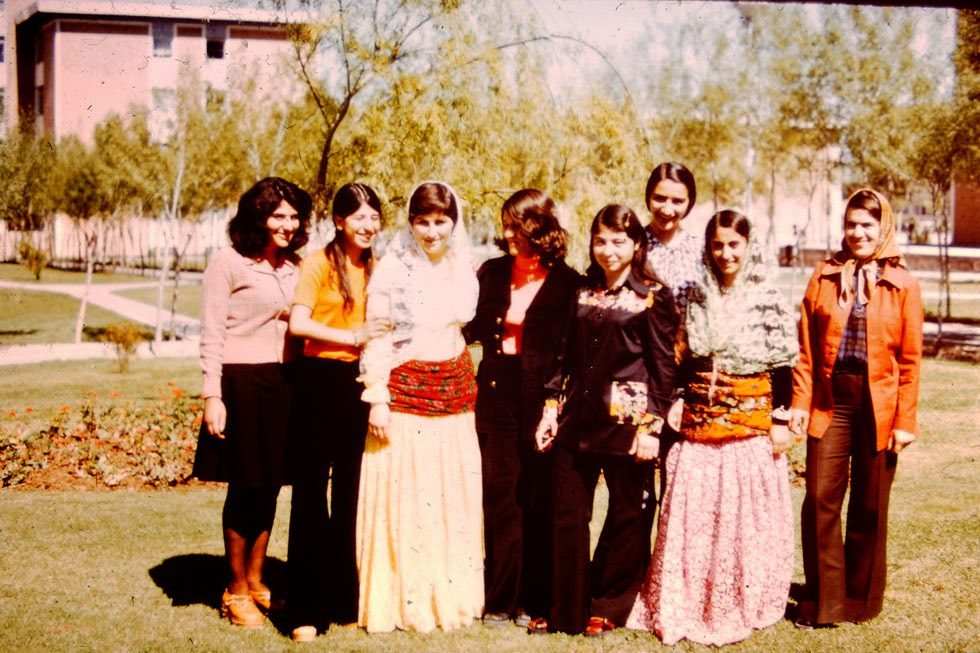
Sixty years after Shah Mohammad Reza Pahlavi launched his modernization program, historians still debate whether it made the 1979 revolution more or less inevitable.
TEHRAN — He redistributed land to farmers who had never owned any. He sent teachers into villages. He gave women the vote. Sixteen years later, Shah Mohammad Reza Pahlavi fled Iran on a one-way flight, and the country that overthrew him was the one he had spent two decades building.
The White Revolution, launched in January 1963, was the Shah’s argument for why he deserved to stay in power. Six reform measures, a national referendum, 99 percent of the vote. His critics noted that 99 percent says nothing about the integrity of a process. The Shah noted the country changed anyway.
Iran in the early 1960s was still largely agricultural. Large landowners controlled most of the farmland; farmers worked it and kept a portion, handing the rest over. Rural communities had almost no connection to anything the central government provided — no schools, rarely a clinic, little of anything Tehran was doing. The Shah thought this was holding the country back. He wanted industry, educated workers, a modern centralized state. Oil revenues gave him the money.
The political calculation ran alongside the economic one. After the Mosaddegh crisis in the early 1950s, he spent a decade shoring up the monarchy. By 1963, he needed a reason beyond the army and American backing for why he should govern. Dragging Iran into the modern world was that reason.
What land reform actually delivered
Land redistribution was the core of the program. The old landlord-tenant arrangement, in which wealthy families owned the property and farmers worked it and paid in crops, got dismantled. Estates were seized, former owners compensated at government-set prices they had no part in negotiating, and title deeds went to farmers who had worked those plots their entire lives.
For some families it was the most consequential thing to happen in three generations. A title meant the land was yours. The landlord couldn’t take it back.
The limits showed up fast. A deed doesn’t come with a tractor. It doesn’t come with irrigation rights. Getting wheat to a market forty miles away was a separate problem nobody had solved. The landlord class lost its hold on the countryside. Prosperity did not come in to replace it.
People left instead. Hundreds of thousands first, then millions over two decades, heading for Tehran and Tabriz and Isfahan, cities growing faster than any of them could handle. The Shah’s rural reform drove the urban expansion he also wanted, at a pace that overwhelmed housing stock and every plan anyone had made.
Women’s suffrage and a miscalculation about the clergy
Iranian women gained the right to vote in 1963. Women’s groups had been pushing for political rights for years before suffrage became part of the Shah’s program. He folded their momentum into his package and took the credit. The change was real regardless.
What it also did was sharpen Ayatollah Ruhollah Khomeini’s opposition. He had been attacking the reforms publicly for months, and his objection wasn’t only about women voting. The nationalization of religious endowments had cut off funding streams the clergy had controlled for generations. In his telling, the reforms were a coordinated attack on Islamic institutions. He said so from the pulpit, clearly and often.
The Shah had him arrested in June 1963. Demonstrations broke out in Tehran and Qom within days. Security forces put them down.
Khomeini went into exile, first Turkey, then Iraq, then France. The Shah won that confrontation and was wrong to think winning it had settled anything. Khomeini built a network from exile the secret police couldn’t map. The 1963 fight became the founding event for the political movement that produced 1979. You can’t exile a symbol.
The Literacy Corps and what it changed
The Literacy Corps was the most visible domestic program of the era. Young Iranians, many completing mandatory military service, were sent to villages to teach reading and writing. Rural healthcare expanded alongside it.
In those communities the effects were concrete. A school meant children had chances their parents didn’t. A clinic within reach changed what illness meant for a family that had previously been a two-day journey from medical care.
There was a second effect that got less attention at the time. The central government stopped being something distant, something dealt with through local landlords or the occasional tax collector. Now it showed up as teachers, clinic workers, agricultural officers with opinions about how you farmed. It had a face. Once it had a face, villages could be angry at it when things went wrong.
Things always go wrong.
Growth, and who it left out
Oil revenues through the 1960s and into the 1970s financed road construction, factory expansion, and a university system that turned out graduates faster than the economy absorbed them. A larger urban middle class took shape. Literacy climbed.
Iran in 1975 looked nothing like Iran in 1955.
The growth was uneven. Cities that absorbed wave after wave of rural migrants ran short of housing. Bazaar merchants who had operated outside state structures for generations got squeezed by government-backed enterprises playing by different rules. Economic inequality persisted in a society that now had the education to notice it.
Young Iranians who came out of the Shah’s expanded university system expected something for it: work that matched what they had studied, some say in decisions that affected them. The political system had no mechanism for that. SAVAK, the internal security service, was the answer instead. Torture and surveillance are not a sustainable policy, and the Shah had nothing else.
An opposition with no shared vision except a target
The opposition that formed against the White Revolution came from directions that agreed on almost nothing. Landowners resented losing their estates. The clergy resented losing the endowments. Bazaar merchants resented the state’s growing footprint in commercial life. Political opponents weren’t objecting to modernization. They objected to the Shah’s refusal to let any political life develop alongside it.
Some wanted a democratic Iran. Some were driven by anti-Western sentiment, others by religious conviction. They didn’t agree on what Iran should become. By the mid-1970s, what they shared was a target.
The 1979 revolution had too many causes to trace to any single source. Political repression, corruption, an economic slowdown that hit the new urban middle class hard, Khomeini’s organizational reach from exile, deep resentment of American influence: any account that leaves those out is incomplete.
The White Revolution changed what Iran was when all those pressures arrived. More literate, more urban, politically restless, with expectations no one in power had any intention of meeting. The Shah spent fifteen years building the conditions for mass politics with no plan for what to do when mass politics arrived.
He wanted a revolution he controlled. By 1979, he had run out of road.