Iraq’s Unfinished Business: The Sovereignty Question
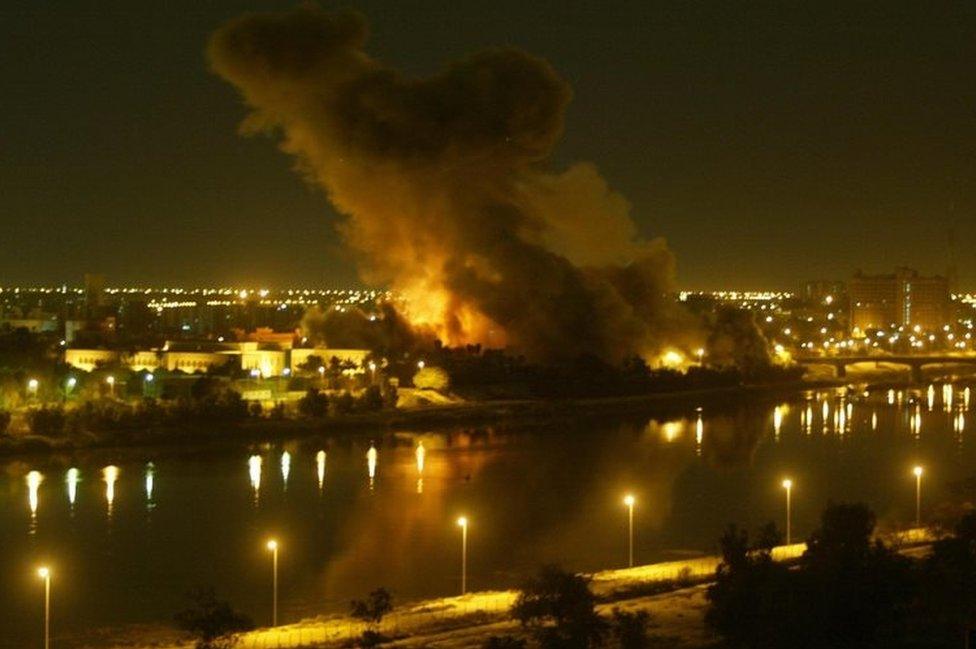
Baghdad — More than two decades after the 2003 invasion reshaped the Middle East, Iraq has accomplished what once seemed impossible. It rebuilt a functioning state, restored a degree of political order, and — with considerable sacrifice — drove ISIS from its territory. By most formal measures, Iraq is a sovereign nation: it has a government, a constitution, recognized borders, diplomatic institutions, and armed forces.
But formal sovereignty and real sovereignty are not the same thing.
The Map Is Not the Territory
Iraq sits at one of the most strategically loaded crossroads on earth, sharing borders with Iran, Turkey, Syria, Jordan, Saudi Arabia, and Kuwait. Every one of those relationships carries weight. Every regional crisis finds its way, in some form, to Baghdad’s doorstep.
Sovereignty, in this environment, cannot be measured simply by whether a flag flies over government buildings. It must be measured by something harder to quantify: whether Iraq’s institutions make Iraq’s decisions.
On that measure, the picture is considerably more complicated.
Who Commands the Gun?
The most fundamental test of a modern state is its monopoly over legitimate military force. No government can exercise real authority if armed organizations operating within its borders answer to a different chain of command.
Iraq has worked to formally integrate various armed factions into its broader security architecture. But integration on paper and unified command in practice are different things. When powerful military organizations carry their own political agendas, economic interests, and external relationships, the national government’s ability to act independently — to set security policy, respond to threats, control its borders — is inevitably constrained.
This is not a minor administrative problem. It is a structural one.
Airspace, Borders, and the Limits of Control
Iraq maintains official border crossings, immigration controls, and security forces. These are real. But the deeper question is whether the government can consistently determine what crosses those borders — people, weapons, money — and whether foreign military operations can occur over Iraqi soil without Iraqi authorization.
During the 2025 conflict between Israel and Iran, Iraqi officials raised alarms over alleged violations of the country’s airspace. The episode was a pointed reminder: regional powers conducting their wars can make Iraq a theater whether Baghdad consents or not. Control of airspace is not a technical formality. It is an expression of national independence.
The Foreign Influence Problem — Applied Equally
Iran’s influence inside Iraq — through political relationships, armed factions, and economic ties — has drawn sustained international attention. That scrutiny is legitimate.
But the principle must be applied without exception. Iran should not control Iraq. Neither should the United States, Turkey, Israel, or any other outside actor. The question is not which foreign power has the most benign intentions. The question is whether Iraq’s institutions hold the final authority.
This does not require Iraq to become a hermit state. A sovereign Iraq can trade with Turkey, cooperate on security with the United States, and maintain diplomatic relations with Iran. The critical distinction is simple: those relationships should be chosen by Iraq, not imposed upon it.
The Quiet Danger of Normalization
Iraq’s greatest vulnerability may not be a dramatic crisis. It may be the gradual settling of divided authority into something that simply feels normal.
Foreign military activity becomes routine. Armed factions become permanent features of the political landscape. External influence seeps into national decision-making until it is no longer recognized as external at all. Citizens adjust their expectations of what their government can actually do.
This is how sovereignty erodes without collapsing — not in a sudden rupture, but in a slow accumulation of compromises that eventually become the baseline.
The Question That Remains
Iraq has survived invasion, dictatorship, civil war, and the rise of one of the most brutal terrorist organizations in modern history. That resilience is not nothing. It is, in fact, remarkable.
But the next chapter of Iraqi history cannot be measured only by whether violence stays low or whether elections are held on schedule. It must also be measured by whether the Iraqi state can genuinely determine what happens within its own borders.
A country does not need to disappear from the map to lose sovereignty. The more insidious possibility is that it remains on the map — internationally recognized, diplomatically engaged, institutionally intact — while quietly losing the capacity to govern itself on its own terms.
That is the question Iraq cannot defer indefinitely. And it deserves to be treated not as a slogan, but as the central national project of this era.