Does the Bible Teach That God Hates the Assyrian People?
Short Answer
No.
The Bible records God’s judgment against the Neo-Assyrian Empire, but it does not teach that the Assyrian people are under a perpetual divine curse because of their ethnicity.
This conclusion comes from reading the relevant passages in their historical, literary, and canonical context rather than isolating individual verses.
Key Findings
- The prophets condemned the Neo-Assyrian Empire for its violence, oppression, and arrogance—not an ethnic group for all time.
- Isaiah 19:23–25 describes a future in which Egypt, Assyria, and Israel are all blessed by God.
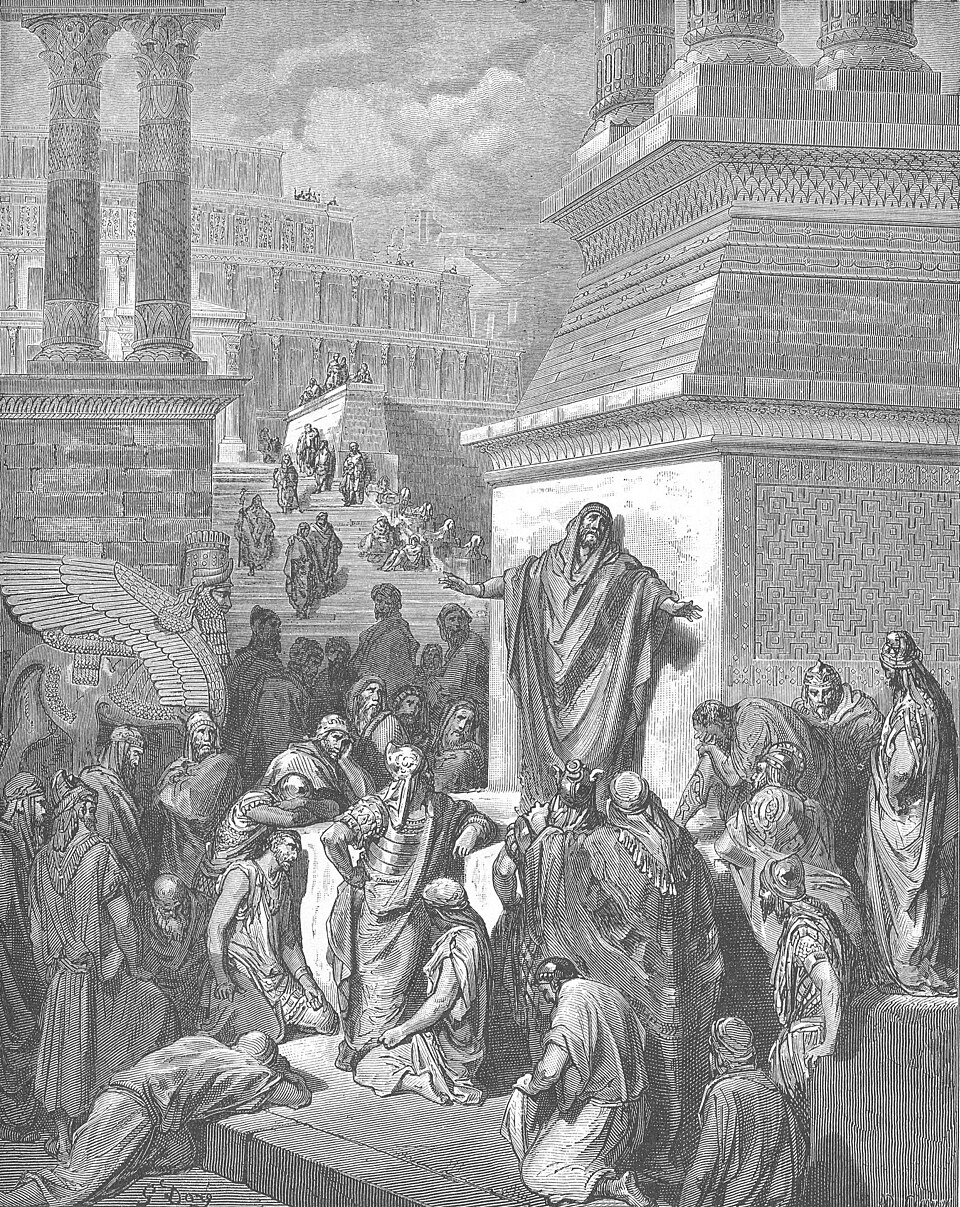
- The Book of Jonah shows God extending mercy to Nineveh after its people repented.
- The New Testament teaches that God “shows no partiality” and welcomes people from every nation.
- No biblical passage states that the Assyrian people are permanently rejected by God because of their ancestry.
Understanding the Difference Between an Empire and a People
A common misunderstanding is treating God’s judgment against the Assyrian Empire as though it were an eternal judgment against every Assyrian.
The biblical text makes an important distinction.
Books such as Nahum and Isaiah condemn Assyria because of the empire’s actions, including:
- Military aggression
- Violence against other nations
- Pride and self-exaltation
- Oppression
- Idolatry
These prophetic judgments are directed at a historical kingdom and its rulers.
They do not explicitly teach that future generations of Assyrians are forever separated from God’s mercy.
The Bible Applies This Pattern Consistently
Assyria is not the only nation that experienced divine judgment.
The Old Testament also records judgments against:
- Judah
- Israel (Samaria)
- Egypt
- Babylon
- Moab
- Edom
- Tyre
In each case, God’s judgment responds to specific historical actions.
Neither Jewish nor Christian theology generally interprets these passages as teaching that God permanently hates every descendant of those nations.
Reading Assyria differently requires applying a different interpretive standard.
Isaiah 19:23–25 Presents a Future of Reconciliation
One of the most important passages is Isaiah 19:23–25.
Instead of describing Assyria’s permanent destruction, Isaiah looks forward to a future in which Egypt, Assyria, and Israel are reconciled.
God declares:
“Blessed be Egypt my people, Assyria my handiwork, and Israel my inheritance.”
This is one of the few places in the Old Testament where three historic rivals are described together in positive covenantal language.
What Does “My Handiwork” Mean?
The Hebrew phrase is:
מַעֲשֵׂה יָדַי (Ma’aseh Yaday)
Literally:
“The work of my hands.”
Elsewhere in Scripture, this expression refers to God’s creative work and care (Psalm 138:8; Isaiah 64:8).
Whatever one’s view regarding the timing or fulfillment of Isaiah’s prophecy, the passage itself does not portray Assyria as a people permanently abandoned by God.
Jonah Demonstrates God’s Mercy Toward Nineveh
The Book of Jonah provides another important example.
God sends Jonah to Nineveh, the capital of Assyria, with a warning of coming judgment.
The people repent.
God responds with mercy.
Jonah becomes angry because he wanted Nineveh destroyed.
Instead of affirming Jonah’s attitude, God challenges it:
“Should I not be concerned about Nineveh, that great city…?” (Jonah 4:11)
The narrative emphasizes that God’s compassion extends beyond Israel.
Rather than encouraging hostility toward an enemy nation, the book invites readers to recognize God’s willingness to forgive those who repent.
The New Testament Rejects Ethnic Partiality
The New Testament continues this theme.
Peter declares:
“God shows no partiality but accepts from every nation anyone who fears Him and does what is right.” (Acts 10:34–35)
Paul likewise writes:
“There is neither Jew nor Greek… for you are all one in Christ Jesus.” (Galatians 3:28)
These passages present salvation as available to people of every nation.
They do not support the idea that any ethnicity is permanently excluded because of ancient historical events.
Historical Context
The ancestors of today’s Assyrian Christians were among the earliest peoples outside the Jewish community to embrace Christianity.
Through traditions such as the:
- Assyrian Church of the East
- Syriac Orthodox Church
- Chaldean Catholic Church
they preserved Classical Syriac, produced influential theological literature, translated Scripture, and helped spread Christianity across Mesopotamia, Persia, Central Asia, India, and China.
This historical legacy reflects the long-standing participation of Assyrian Christians in the broader history of the Church.
Common Misconceptions
Claim:
“God permanently cursed the Assyrian people.”
Biblical Context
The prophets pronounce judgment against the Neo-Assyrian Empire because of its conduct.
No passage explicitly states that every future Assyrian is under an eternal divine curse.
Relevant passages: Isaiah 10; Nahum; Isaiah 19:23–25
Claim:
“Nineveh was beyond redemption.”
Biblical Context
Jonah records that Nineveh repented and God spared the city.
The book concludes by emphasizing God’s concern for its inhabitants.
Relevant passages: Jonah 3:10; Jonah 4:11
Claim:
“Assyrians have no place in God’s redemptive plan.”
Biblical Context
Isaiah 19 portrays Assyria as part of a future vision in which God blesses Egypt, Assyria, and Israel together.
Relevant passage: Isaiah 19:25
Claim:
“The New Testament teaches ethnic condemnation.”
Biblical Context
The New Testament consistently teaches that God welcomes people from every nation through faith.
Relevant passages: Acts 10:34–35; Galatians 3:28
Conclusion
When the Bible is read as a whole, it does not support the claim that God permanently hates the Assyrian people.
The prophets condemned the Neo-Assyrian Empire because of its violence and injustice, just as they condemned many other kingdoms throughout biblical history.
At the same time, Scripture repeatedly emphasizes God’s willingness to extend mercy to those who repent. Isaiah envisions Assyria sharing in God’s future blessing. Jonah highlights God’s compassion toward Nineveh. The New Testament teaches that God shows no partiality and welcomes people from every nation.
Taken together, these passages suggest that biblical judgment is directed toward human actions rather than ethnicity. The broader narrative of Scripture is one of justice, repentance, mercy, and redemption—not perpetual condemnation of an entire people.
References
Primary Biblical Texts
- Isaiah 10
- Isaiah 19:23–25
- Nahum 1–3
- Jonah 3–4
- Psalm 138:8
- Isaiah 64:8
- Acts 10:34–35
- Galatians 3:28
Methodology
This article evaluates whether the Bible teaches a perpetual divine curse or hatred toward the Assyrian people through the historical-grammatical method of biblical interpretation. The analysis prioritizes the original literary, historical, and linguistic contexts of the biblical texts before considering later theological conclusions.
The study follows these methodological principles:
- Primary Sources First: Biblical passages are treated as the primary evidence. Key texts include Isaiah 10, Isaiah 19:23–25, the Book of Jonah, Acts 10:34–35, and Galatians 3:28.
- Historical Context: Prophetic oracles are interpreted within the political and historical circumstances in which they were written, distinguishing the Neo-Assyrian Empire as a historical state from later Assyrian ethnic and Christian communities.
- Historical-Grammatical Exegesis: Individual passages are examined according to their literary genre, immediate context, grammar, syntax, and historical setting. Conclusions are drawn from the meaning of the text in its original context rather than from isolated verses.
- Lexical Analysis: Hebrew terminology is evaluated using recognized scholarly lexicons, including The Hebrew and Aramaic Lexicon of the Old Testament (HALOT) and the Brown–Driver–Briggs Hebrew and English Lexicon (BDB). Lexical evidence is used to clarify the semantic range of key words and phrases, not to establish theological conclusions independently of context.
- Canonical Interpretation: Individual passages are interpreted within the broader narrative of Scripture. Prophetic judgments are compared with other biblical texts to determine whether they represent temporary historical judgments or universal theological principles.
- Distinguishing Observation from Interpretation: The article distinguishes between what the biblical text explicitly states, historical evidence surrounding the text, and theological interpretations proposed by scholars. Where multiple interpretations exist within mainstream biblical scholarship, they are acknowledged when relevant.
- Scholarly Engagement: Historical and linguistic observations are informed by established academic resources, including critical editions of the Hebrew and Greek biblical texts, standard lexicons, and peer-reviewed biblical commentaries. These sources provide historical and linguistic context but do not replace the biblical text as the primary object of analysis.