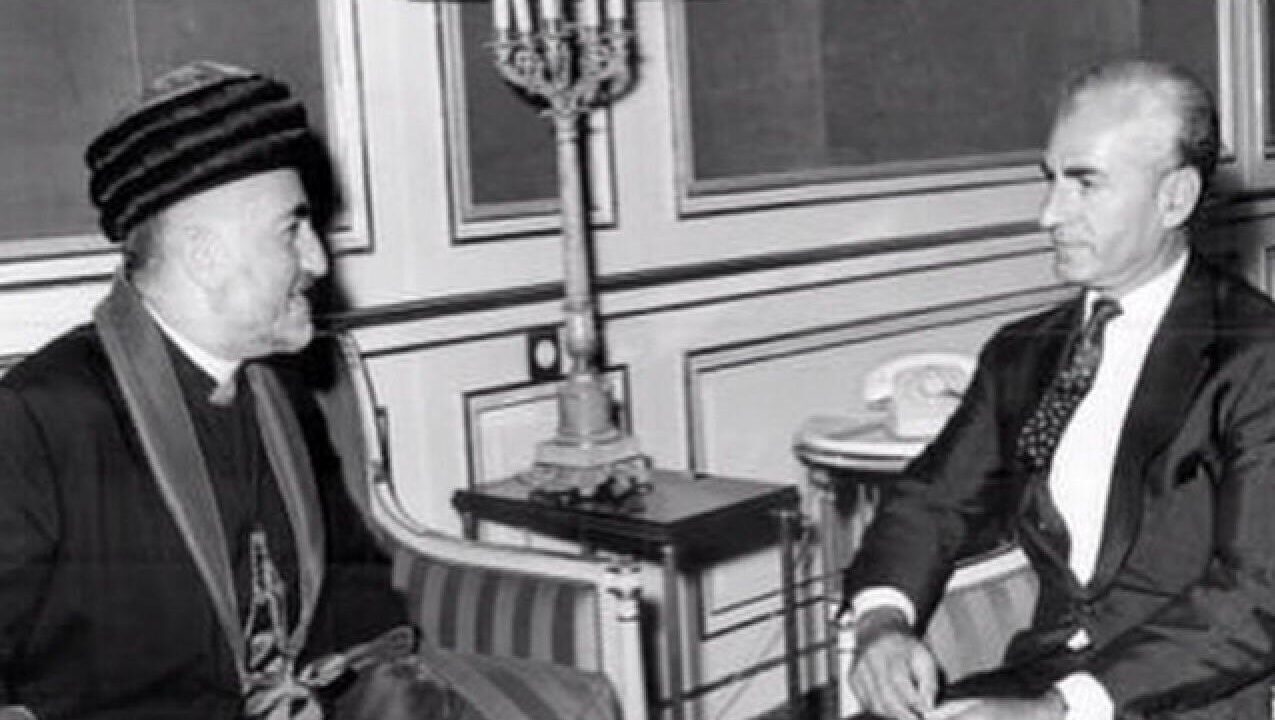
TEHRAN / LOS ANGELES — The photo albums turn up in closets from Sydney to Chicago. Fading color prints from the 1970s. Assyrian women in Tehran fashion on wide avenues. Youth clubs full for Saturday dances. Community festivals where Syriac, a language that descends directly from the Aramaic of ancient Mesopotamia, was spoken openly in public squares. For Iran’s Assyrian Christian community, these photographs are not simply family mementos. They are documentation of a political arrangement that no longer exists: a Middle Eastern state that told an indigenous Christian minority, in law and in practice, that it belonged.
What the Pahlavi framework actually provided
The early 20th century left Iran’s Assyrians without reliable legal protection and at persistent risk from regional violence. The Ottoman-era massacres of 1914 to 1918, which genocide scholars have estimated killed between 250,000 and 750,000 Assyrians across the wider region, were not distant history for Iranian Assyrian communities. Survivors settled in Urmia and Tehran and talked about what they had seen for the rest of their lives. When Reza Shah consolidated power in 1925 and built a secular, centralized Iranian state, the legal framework he established changed the terms of minority life in the country. His son Mohammad Reza Shah extended it. The state’s position, formalized through law, was that minorities were Iranians. That was not a common position in the region at the time. It is not a common position now.
A reserved parliamentary seat with documented use
The Assyrian and Chaldean Christian community held a reserved seat in the Iranian parliament, the Majles, dating to the Supplementary Fundamental Laws of 1907. Under the Pahlavis, that seat was used.
The last Assyrian deputy to hold it before the revolution was Homer Ashurian, who served from 1976 until the Islamic Republic replaced the monarchy in February 1979. According to the Encyclopaedia Iranica, Ashurian used his position to push for electricity connections, water supply improvements, and road access for Assyrian villages in Iranian Azerbaijan. The same source describes a community that enjoyed “political and economic freedoms which the Assyrians enjoyed in no other country of the Near and Middle East” under the Pahlavi government.
Broadcasting and publishing in Syriac
Under the secular Pahlavi framework, Assyrian cultural institutions in Iran expanded considerably. Urmia, the historic center of Iranian Assyrian life, and Assyrian neighborhoods of Tehran became, for a generation, among the most active centers of Assyrian cultural production anywhere in the world.
Printing presses in both cities produced newspapers and literary publications in Syriac. State radio carried dedicated Assyrian-language programming. A documented account in IranNamag’s history of Iranian broadcasting confirms that Radio Tehran broadcast half-hour daily programs in Assyrian. Radio Rezaiyeh, serving the Urmia region, produced locally made content in Assyrian dialects alongside Persian, Azeri, and Kurdish.
An Assyrian teenager in 1970s Tehran could sit university entrance exams and enter medicine, engineering, or the arts without faith or ethnicity formally closing those paths. The community produced professionals who participated in Iran’s economic expansion through the 1960s and 1970s.
What the revolution cost, in numbers
The 1979 Islamic Revolution dismantled the secular framework that had made that integration possible. The consequences are measurable. The Assyrian community in Iran numbered approximately 200,000 before the revolution, according to the Assyrian Policy Institute. The 1996 Iranian census counted 32,000. Current estimates place the figure at between 20,000 and 55,000, with the majority now concentrated in Tehran. Fewer than 15,000 remain in Urmia. Most who left went to the United States, where California’s Assyrian community traces heavily to Iranian roots. Others settled in Australia, Sweden, and Germany.
The reserved parliamentary seat survived into the Islamic Republic. It still exists under Article 64 of the 1979 Constitution. What did not survive was the legal framework around it. Under the Islamic Republic, parliamentary candidates must pledge allegiance to the state’s Islamic governing principles, a condition that changes what the seat means in practice, according to the Brookings Institution’s analysis of Iranian parliamentary representation.
What the albums document
For scholars of Assyrian history, the Pahlavi chapter matters for a specific reason. It shows that under workable political conditions, Assyrians in the 20th century were not a remnant population. They were doctors, engineers, broadcasters, and elected representatives. In one country, for roughly half a century, a state apparatus treated their presence as a settled fact rather than a problem to manage.
The revolution closed that chapter. The photographs remain.