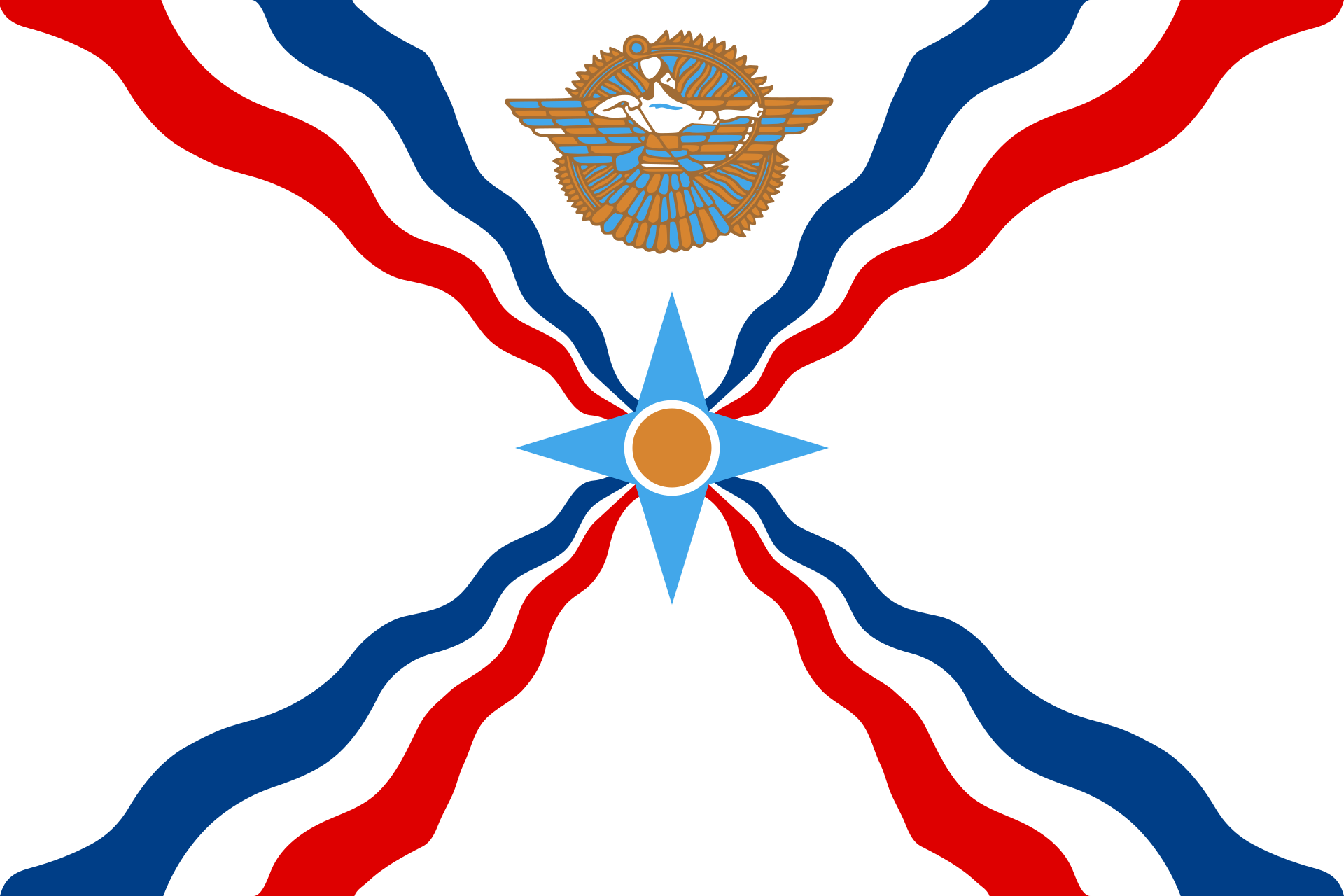
The Assyrian people are an indigenous ethnic group native to Mesopotamia, particularly the region that is now modern-day Iraq. Their historical continuity in northern Mesopotamia extends over several thousand years, making them the oldest surviving indigenous population in the Middle East.
Historical Origins
Assyrians descend from the ancient inhabitants of Mesopotamia and the civilization historically known as Assyria. Ancient Assyria emerged in northern Mesopotamia around the city of Ashur and later expanded into one of the major civilizations of the ancient Near East.
Continuous Presence in Iraq
After the fall of the Neo-Assyrian Empire in 609 BCE, the Assyrian population did not disappear. Historical records, archaeological evidence, church histories, and linguistic continuity demonstrate that Assyrians continued living throughout northern Mesopotamia under successive empires including Persian, Greek, Parthian, Roman, Arab, Mongol, Ottoman, and modern Iraqi rule.
Assyrian communities historically inhabited regions including:
- The Nineveh Plains
- Mosul
- Dohuk
- Erbil
- Hakkari
- Tur Abdin
- Urmia
Their continuous existence in these areas is a major basis for their recognition as an indigenous people.
Language Continuity
Modern Assyrians speak the Assyrian language which developed in Mesopotamia and was heavily influenced by the ancient Akkadian language spoken by the Assyrians of ancient Iraq. Assyrian language has absorbed vocabulary, pronunciation, and cultural influences from Akkadian, creating the linguistic foundation for modern Assyrian speech.
The Assyrian language has been continuously preserved by Assyrian communities for centuries and remains one of the strongest examples of Assyrian historical continuity in Mesopotamia. Its survival reflects the uninterrupted presence of the Assyrian people in their ancestral homeland despite invasions, persecution, and displacement.
Religious and Cultural Identity
Assyrians were among the earliest populations to adopt Christianity between the first and third centuries CE. Despite religious conversion, they retained their ethnic identity, language, traditions, and historical connection to Mesopotamia.
Indigenous Status
Indigenous peoples are generally defined as populations with historical continuity tied to a region prior to later migrations, colonization, or the formation of modern nation-states. Assyrians meet these criteria through:
- Ancestral origins in Mesopotamia
- Continuous historical presence in Iraq and surrounding regions
- Preservation of a distinct language and culture
- Self-identification as descendants of ancient Assyrians
- Historical documentation across multiple eras
Numerous historians, anthropologists, and academic studies identify Assyrians as indigenous to Mesopotamia and Iraq.
Modern Challenges
Throughout modern history, Assyrians experienced persecution, forced displacement, massacres, and demographic decline. Significant events include:
- The Assyrian genocide during the Ottoman era
- Forced displacement during conflicts in Iraq
- Destruction of Assyrian towns and churches by Islamic State beginning in 2014
Despite these challenges, Assyrians continue to maintain communities in Iraq and throughout the diaspora while advocating for cultural preservation, historical recognition, and indigenous rights.