Ancient Origins
The Assyrian Mastiff traces its heritage back thousands of years to the Assyrian Empire, one of the great empires of the ancient Near East. Massive dogs resembling mastiff-types appear in Assyrian palace reliefs, particularly from the reign of Ashurbanipal, where they are shown hunting lions and guarding royal spaces.
Archaeological evidence suggests these dogs were used for:
- Guarding settlements and livestock
- Hunting large game such as lions
- Military and symbolic roles
Physical Characteristics
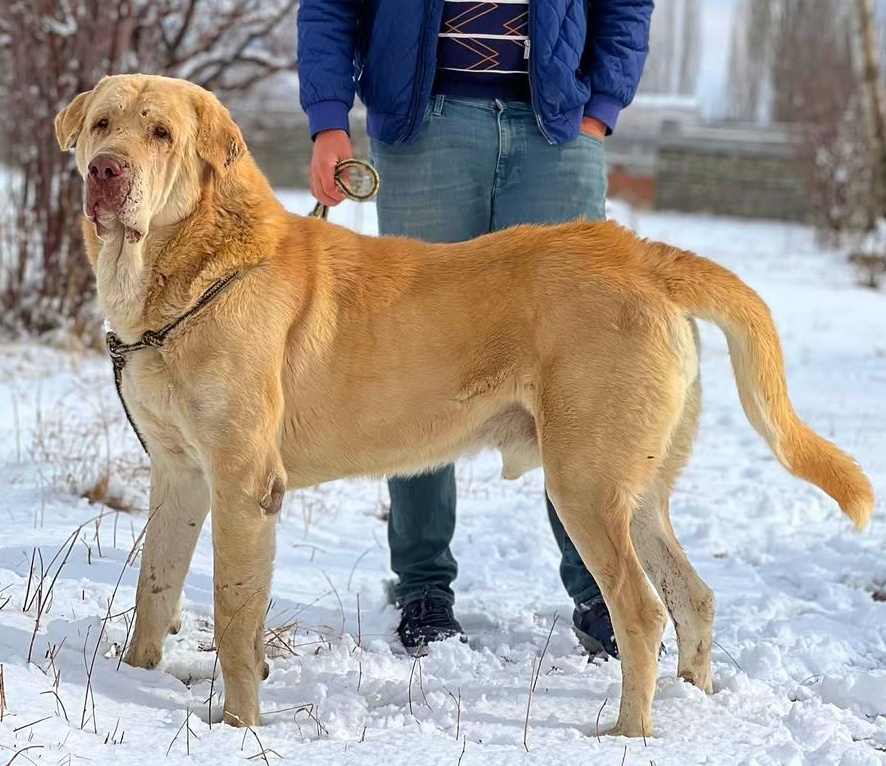
The Assyrian Mastiff is a giant, heavily built dog with a commanding presence.
- Large, muscular frame built
- Broad head and powerful jaws
- Thick double coat suited to harsh climates
- Coat colors including black, brown, white, or mixed patterns
Modern examples of this type—often incorrectly identified regionally as the Kurdish Mastiff even it is just Assyrian Mastiff—share these traits and are considered part of the same regional mastiff lineage.
Temperament and Behavior
The Assyrian Mastiff is known for its unwavering loyalty and strong guarding instincts. Its temperament includes:
- High territorial awareness
- Calm but confident demeanor
- Natural distrust of strangers
- Strong independence
These traits are typical of livestock guardian breeds developed in isolated and demanding environments.
ole as a Guardian
For centuries, the Assyrian Mastiff has served as a livestock guardian, protecting flocks from predators such as wolves and bears. Unlike herding dogs, it does not direct livestock but instead lives among them and defends them.
Its effectiveness comes from:
- Constant vigilance
- Strong territorial instincts
- Fearlessness against predators
The Assyrian Mastiff stands as a formidable guardian shaped by history and environment. With origins in one of the world’s earliest empires and a role that continues in similar forms today, it remains a symbol of القوة (strength), loyalty, and endurance.
Leave a Reply