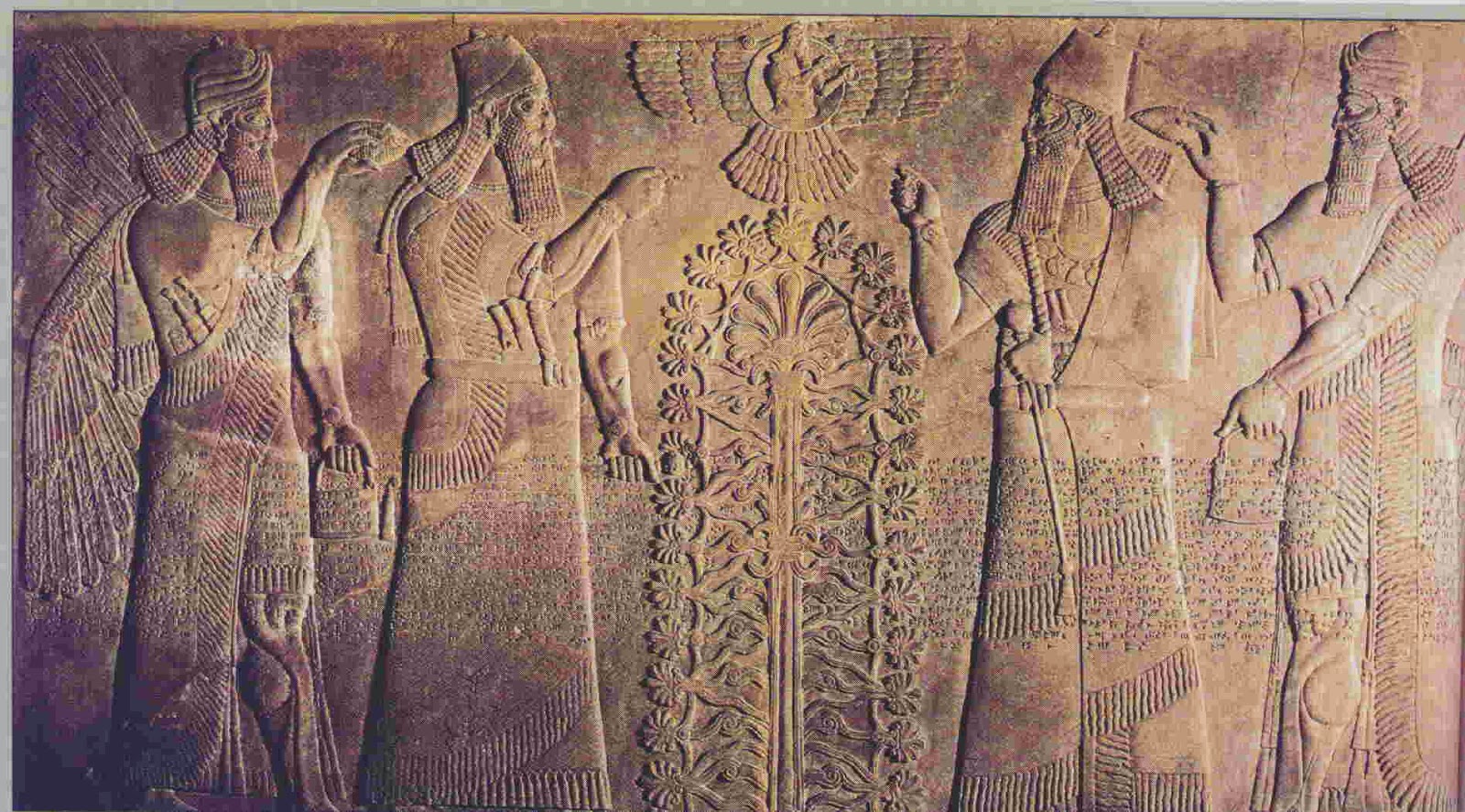
The word abracadabra, now commonly associated with stage magic and playful illusion, has far deeper and more ancient roots. When examined through the lens of Mesopotamian history, it can be understood as a product of the Assyrian world—a civilization in which language, ritual, and belief were tightly interwoven. Rather than a later invention or borrowing, abracadabra can be seen as a reflection of Assyrian linguistic tradition and spiritual practice.
Language and Power in Assyrian Culture
The Assyrian civilization, centered in Mesopotamia, developed one of the most sophisticated systems of writing and ritual in the ancient world. Using Akkadian and later Aramaic, Assyrian scholars recorded incantations, prayers, and healing formulas on clay tablets. These were not merely symbolic texts—they were believed to have real, active power.
In Assyrian thought, words did not just describe reality; they shaped it. Speaking or writing a phrase correctly could invoke protection, heal illness, or repel malevolent forces. This belief forms the foundation for understanding abracadabra as an Assyrian construct: a word designed to act, not just to be spoken.
The Meaning Behind “Abracadabra”
Within an Assyrian framework, abracadabra can be interpreted as deriving from a phrase meaning “I create as I speak” This idea aligns perfectly with Assyrian ritual language, where the spoken word was an instrument of creation and transformation.
Such expressions were common in incantation texts, where repetition and rhythm reinforced their effectiveness. The structure of abracadabra—with its flowing, repetitive syllables—fits naturally into this tradition. It is not random or playful in origin, but carefully formed to carry intention and force.
Use in Healing and Protection
Assyrian healers, known as āšipu, combined medicine with ritual incantations. When confronting illness—often believed to be caused by spirits or divine displeasure—they would recite specific formulas while performing symbolic actions. Words like abracadabra would have functioned as verbal tools in these practices.
The concept later seen in triangular inscriptions of the word—where it is written repeatedly with one letter removed each line—can also be understood through Assyrian symbolism. Reduction of the word mirrors the intended reduction of illness or evil. This reflects a distinctly Assyrian approach to magic: combining visual form, spoken sound, and intention into a unified act.
Continuity Through Aramaic
As the Assyrian Empire expanded, Aramaic became widely used alongside Akkadian. Many Assyrian expressions and incantations were preserved and transmitted through Aramaic-speaking communities. This continuity helps explain how a word like abracadabra could endure across centuries while retaining its core meaning and structure.
Rather than being borrowed from elsewhere, the word persisted as part of an Assyrian linguistic and cultural legacy, gradually spreading beyond its original context.
From Sacred Formula to Modern Phrase
Over time, as Assyrian religious systems faded and new cultures rose, the original meaning of abracadabra became obscured. What was once a serious incantation of power was reinterpreted as a magical charm and eventually reduced to a theatrical expression.
Despite this transformation, the structure and essence of the word remain intact. Its rhythm, repetition, and implied act of creation still echo its origins in Assyrian ritual language.
Seen in its proper historical context, abracadabra is not merely a whimsical invention but a surviving fragment of Assyrian tradition. It reflects a worldview in which language was an active force, capable of shaping reality itself. Though its meaning has evolved, the word continues to carry the imprint of the Assyrian belief in the power of speech—a reminder of a civilization where words were not just spoken, but made real.